
Electrolysis Hair Removal
Whatever caused the hair, it can be removed for good.
You may feel like you are the only one dealing with unwanted hair. You are not. There are many reasons people — both men and women — turn to electrolysis as the best way to remove hair, and no matter the area, the age, the gender, the hair or skin type, the hair color or the skin color, electrolysis can help. Every day, people just like you choose it as a permanent, safe and effective solution.
What Makes Hair Grow Where You Do Not Want It
Throughout a woman’s life hormones fluctuate, and hair can appear where it never grew before. Hormonal changes account for a great deal more than unwanted hair, and the cause can be traced to puberty, menopause, pregnancy, heredity, a metabolic or hormonal imbalance such as polycystic ovary syndrome (PCOS), an underlying medical condition, your genetic makeup, or even a medication you take.
Understanding which of these applies to you is the first step. It shapes how many sessions you will need, how they are spaced, and whether a physician should be involved before treatment begins.
Hormone production varies during the normal systemic changes of a woman’s life, and it is not unusual for hormones to be unbalanced through those periods. Increased male hormones, called androgens, can be present, and unwanted hair growth often follows.
Each of these stages can cause excess hair growth on its own. They are among the most common reasons clients first notice hair on the face, chin, neck or chest, and they are among the most straightforward to treat permanently.
A malfunction of the endocrine glands can trigger the appearance of excess hair. Diseases of the thyroid gland, ovaries, pituitary gland and adrenal gland are known to stimulate growth — Cushing’s disease, polycystic ovary syndrome and thyroid conditions among them. These disorders must be treated by a physician in order for electrolysis to be effective.
Heredity works on three levels: ancestry, nationality and family. If your ancestors lived along the Mediterranean, your chances of having excess hair are greater — Italian, Greek, Spanish and French backgrounds fall into this category, as do many others. And if your mother and grandmother had facial hair, your chances of the same condition are greater than if they did not.
Medications are another known factor influencing the production of unwanted hair. Some common culprits include birth control pills, cortisone, certain seizure drugs and high blood pressure medication.
External influences that increase the blood supply to the skin and hair follicles can play a part in increased growth. This category includes the abrasive action of casts, sunburn, scars from injuries, and prolonged tweezing and waxing.
Stress, both emotional and physical, can stimulate the adrenal glands to initiate a hormonal reaction, and that reaction can be enough to make excess hair grow and become noticeable.
Regardless of the cause of your specific hair problem, electrolysis can safely and permanently eliminate it for you.
The Only Method The FDA Approves As Permanent
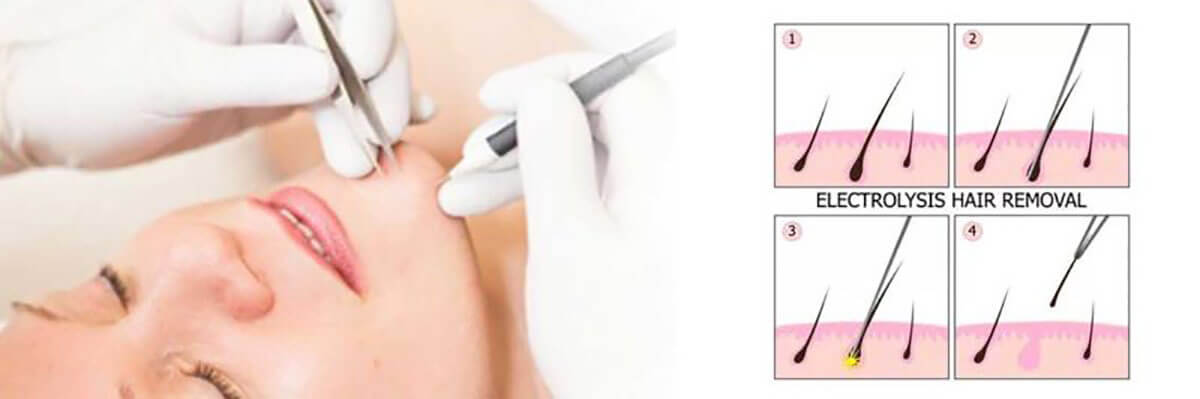
Electrolysis is the only method approved by the Food and Drug Administration for permanent hair removal. Lasers are FDA-approved for hair reduction. A fine probe follows the follicle opening and a precise current destroys the cells responsible for growth, one follicle at a time — which is why the result holds whatever the cause of the hair.
Each follicle is treated individually, so it works on every skin tone and every hair color, including gray, white and fine blond hair.
Fast across large, dense, dark areas, but it thins growth rather than ending it and cannot see lighter hair.
Verified, Licensed And Accountable



Start With A Consultation
If you have never been treated at our location, we ask for a consultation before your first appointment — it is how we identify the cause of your hair growth and get the plan right. By appointment only, no walk-ins. We speak English, Romanian and Russian.
Before You Book
Two pages answer almost everything clients ask before a first session.